

Plants and Animals
Hydroprogne caspia Caspian tern
Key Characteristics
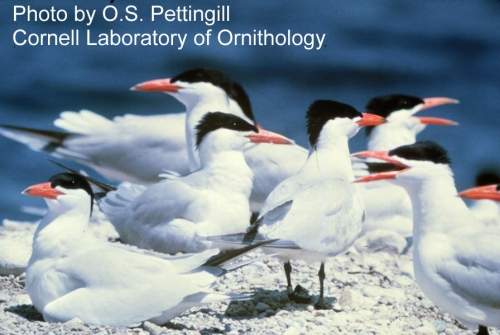
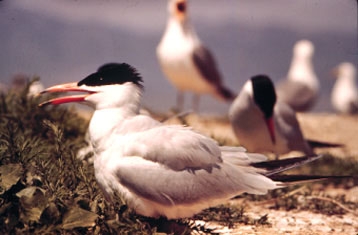
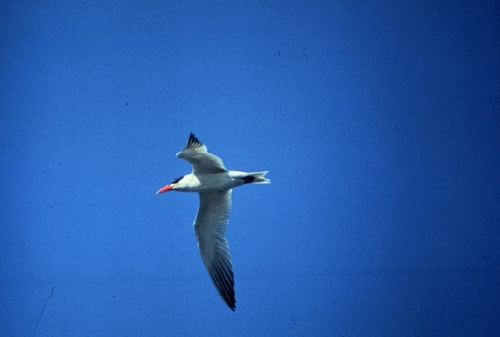
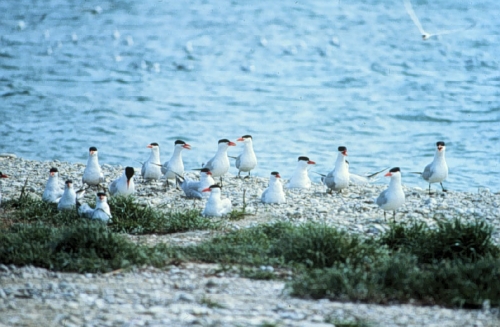
The Caspian tern is the largest of the terns, with a wingspan averaging 31 inches (79 cm). Its size, stout red bill, and lack of a deeply forked tail distinguishes it from other white terns found in the state. Its black cap, large red bill, and tern-like habit of flying slowly with its bill pointed downward separates it from the gulls. The low harsh call of the Caspian tern sounds similar to "karrr" or "kraa-ah" and is given frequently while in flight. The orange feet of immature birds distinguish them from fall-plumaged adults which have black feet.
Status and Rank
US Status: No Status/Not Listed
State Status: T - Threatened (legally protected)
Global Rank: G5 - Secure
State Rank: S2 - Imperiled
Occurrences
| County | Number of Occurrences | Year Last Observed |
|---|---|---|
| Alcona | 1 | 1982 |
| Alpena | 2 | 1999 |
| Arenac | 1 | 2016 |
| Bay | 1 | 2022 |
| Charlevoix | 3 | 2019 |
| Cheboygan | 1 | 1998 |
| Chippewa | 2 | 2022 |
| Delta | 2 | 2002 |
| Emmet | 1 | 2007 |
| Huron | 1 | 2025 |
| Leelanau | 1 | 2016 |
| Mackinac | 5 | 2014 |
Information is summarized from MNFI's database of rare species and community occurrences. Data may not reflect true distribution since much of the state has not been thoroughly surveyed.
Habitat
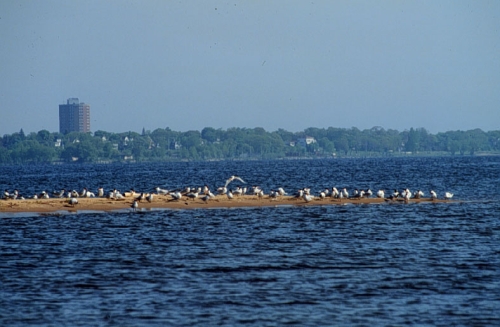
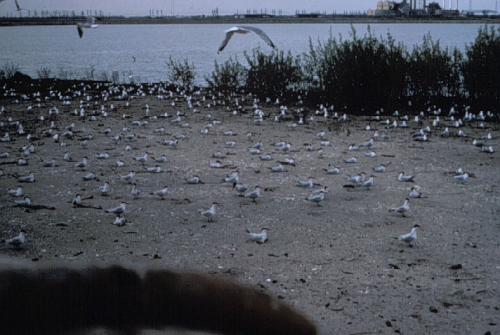
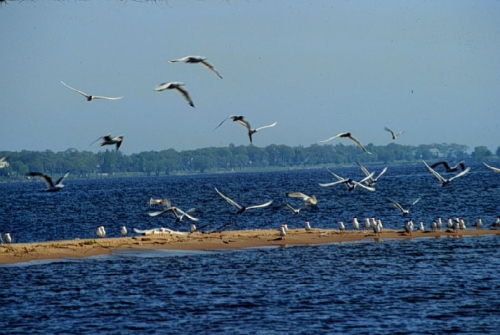
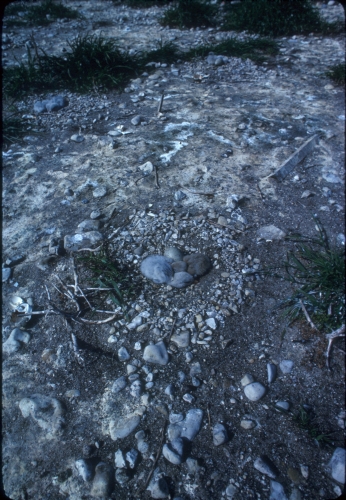
Caspian terns typically nest on islands to avoid many terrestrial predators.
Natural Community Types
For each species, lists of natural communities were derived from review of the nearly 6,500 element occurrences in the MNFI database, in addition to herbarium label data for some taxa. In most cases, at least one specimen record exists for each listed natural community. For certain taxa, especially poorly collected or extirpated species of prairie and savanna habitats, natural community lists were derived from inferences from collection sites and habitat preferences in immediately adjacent states (particularly Indiana and Illinois). Natural communities are not listed for those species documented only from altered or ruderal habitats in Michigan, especially for taxa that occur in a variety of habitats outside of the state.
Natural communities are not listed in order of frequency of occurrence, but are rather derived from the full set of natural communities, organized by Ecological Group. In many cases, the general habitat descriptions should provide greater clarity and direction to the surveyor. In future versions of the Rare Species Explorer, we hope to incorporate natural community fidelity ranks for each taxon.
Management Recommendations
Conservation efforts should concentrate on the protection of nest sites from human disturbance. Terns using contaminated sites for nesting should be provided with alternative breeding sites with uncontaminated substrate. Colonies should be monitored on a regular basis to document changes in numbers of breeding pairs, reproductive success, and impacts of toxins.
Active Period
Migration from third week of April to third week of May
Migration from third week of August to third week of September
Nesting from third week of May to first week of August
Survey Methods
Surveys of nesting colonies may conducted by foot, boat, or aircraft. In any case, efforts should be made to minimize the disturbance to the nesting birds as much as possible.
Visual surveys
Survey Period: From first week of May to fourth week of July
Time of Day: Daytime
References
Survey References
- Bibby, C.J., N.D. Burgess, and D.A. Hill. 1992. Bird Census Techniques. Academic Press, New York.
Technical References
- Evers, D.C. 1994. Endangered and Threatened Wildlife of Michigan. The University of Michigan Press, Ann Arbor. 412pp.
- Hyde, D.A. 1996. Special Animal Abstract for Sterna caspia (Caspian tern). Michigan Natural Features Inventory, Lansing, MI. 3pp.